Jeffrey Morais

Jeffrey Morais

Head of Quantum Software @ BTQ
MSc Student @ UVic

Welcome Traveler.

I am the Head of Quantum Software at BTQ and an MSc student in theoretical physics at the University of Victoria. I formerly graduated with a BSc in honours physics at McGill University.

My research background spans eight years in theoretical physics and computer science throughout various universities ranging from quantum gravity to computational biophysics. Currently I work with Prof. Gavin Brennen at BTQ on optimizing cryptographic proof protocols using topological data analysis techniques and quantum low-density parity-check codes. Simultaneously, I am working under Prof. Thomas Baker investigating the eigenstate thermalization hypothesis across quantum many-body models and characterizing quantum chaos in non-integrable systems.

My interests are deeply rooted in unraveling intricate problems, whether it’s describing our universe with quantum gravity or brain networks with topology. When my soul isn’t being consumed by physics, it’s being devoured by black holes. Also I hike & cook.

Interests
  • Quantum software engineering
  • Quantum error correction
  • Post-quantum cryptography
Education
  • MSc in Physics, 2024 - 2026

    University of Victoria

  • BSc in Honours Physics, 2019 - 2023

    McGill University

Publications

Early work on the swampland criteria and de Sitter vacua in string theory, published in the McGill Science Undergraduate Research Journal. Established the mathematical foundations that inform my approach to quantum software design.

Work

Production quantum software and post-quantum cryptographic systems developed at BTQ Technologies, from error correction toolkits and consensus protocol engineering to quantum random number generation and threat analytics.
QLDPC
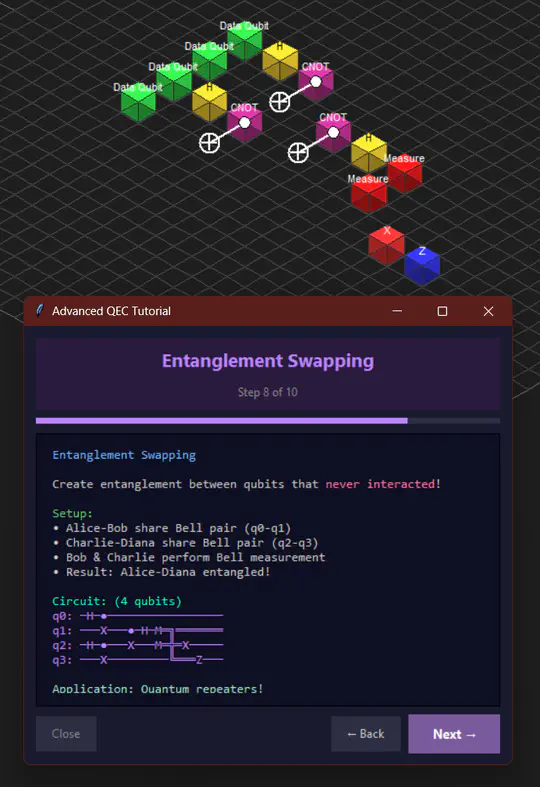
Built an interactive 3D quantum circuit builder at BTQ Technologies to accelerate error correction research, integrating surface code construction, LDPC code visualization, and belief propagation decoding into a single Qiskit-compatible toolkit with guided tutorials.
QLDPC
Topological Quantum Neural Networks
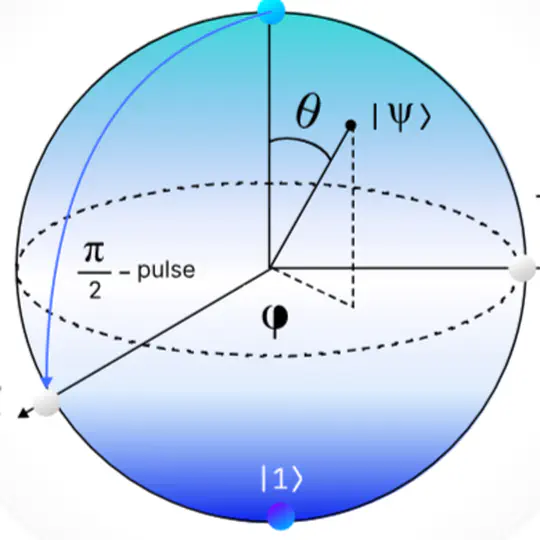
Developed topological quantum neural networks to improve generalization in deep learning and boost quantum algorithm efficiency. Employed TQFT-inspired spin-network encoding with a real-time tensor network simulator and interactive classification GUI for robustness testing.
Topological Quantum Neural Networks
Leonne
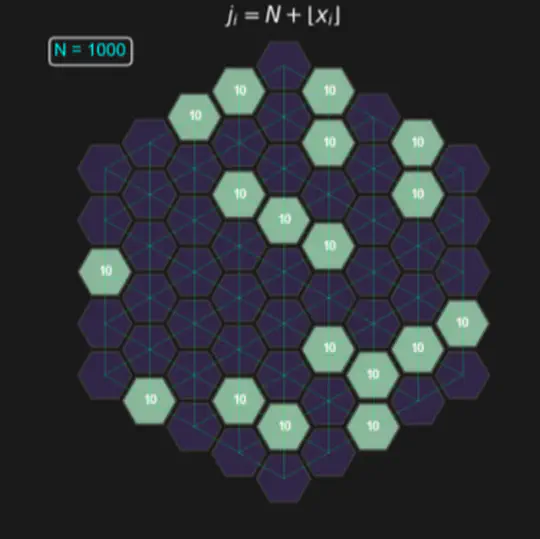
Created modular consensus networks at BTQ Technologies for cryptographic proof in blockchain, leveraging topological data analysis to strengthen post-quantum consensus protocols and characterize autonomous network evolution in quantum key distribution systems.
Leonne
QRiNG
Built a quantum random number generation toolkit at BTQ Technologies for consensus protocols, employing quantum key distribution through Quantum Consensus Networks to produce certifiable randomness with honest-majority verification, enhancing security in cryptographic and blockchain systems.
QRiNG
BasiQ and Qonductor
Developed two quantum-specialized LLM assistants at BTQ Technologies to streamline research and education workflows. BasiQ serves as a domain-tuned tutor for quantum theory, computing, and machine learning. Qonductor provides an internal research assistant for academic and engineering teams.
BasiQ and Qonductor
QByte
Built a quantum industry analytics platform at BTQ Technologies to quantify cryptographic risk timelines and educate stakeholders on quantum threats to public-key infrastructure. Features a quantum risk calculator, threat timeline modeling, and post-quantum migration resources.
QByte

Research

Computational physics and quantum information research underpinning my engineering work, conducted across McGill University, Fudan University, University of Victoria, McGill University Health Centre, University of Alberta, Concordia University, and Vanier College.
Eigenstate Thermalization Hypothesis

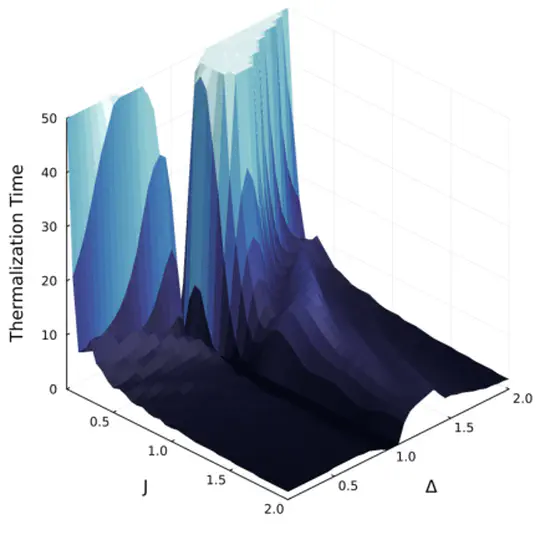
Master’s Thesis. Systematic verification of the eigenstate thermalization hypothesis across quantum many-body models, investigating thermalization behavior and quantum chaos in non-integrable systems. Applied scaling analysis and computational methods to characterize integrability transitions.

Collaborator: Prof. Thomas Baker
Eigenstate Thermalization Hypothesis
Consensus Optimization in Quantum Cryptography

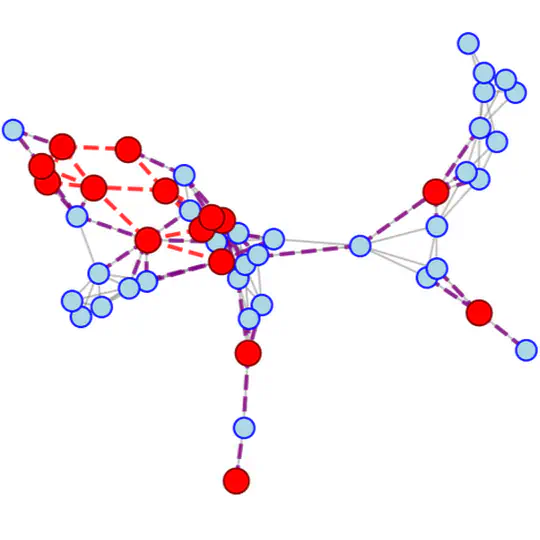
Developed secure and scalable protocols for quantum and post-quantum cryptography, leveraging advanced techniques like topological data analysis and combinatorics. Focused on enhancing security and efficiency in quantum communication and consensus protocols.

Supervisor: Prof. Gavin Brennen
Consensus Optimization in Quantum Cryptography
Topological Quantum Neural Networks Learning

Developed topological quantum neural networks to enhance deep learning generalization and quantum algorithm efficiency. Modeled information flow using topological quantum field theory, enabling scalable quantum computing tasks.

Supervisor: Prof. Antonino Marcianò

Topological Quantum Neural Networks Learning
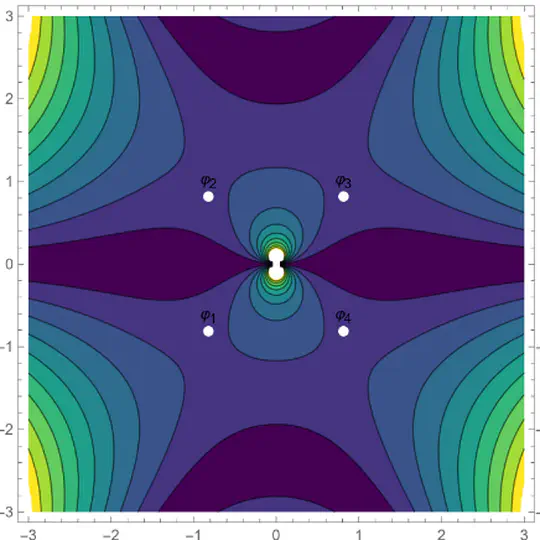
Holographic Qubit Entanglement Structure

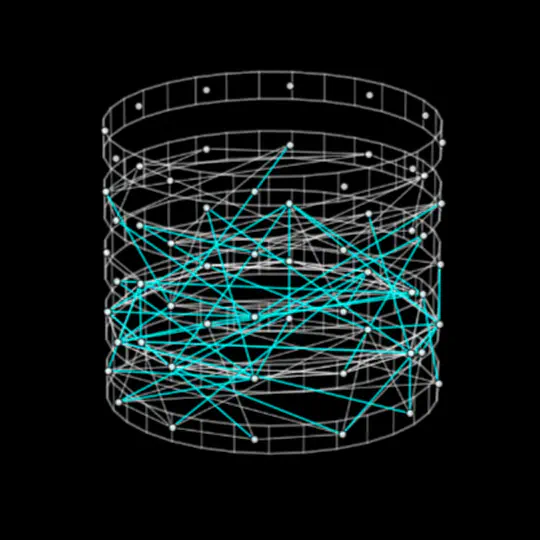
Explored how topological wormholes influence qubit entanglement and quantum network stability. Analyzed tunneling events and wormhole dynamics to improve quantum algorithms and architectures.

Supervisor: Prof. Igor Boettcher
Holographic Qubit Entanglement Structure
de Sitter Cosmology in Quantum Gravity

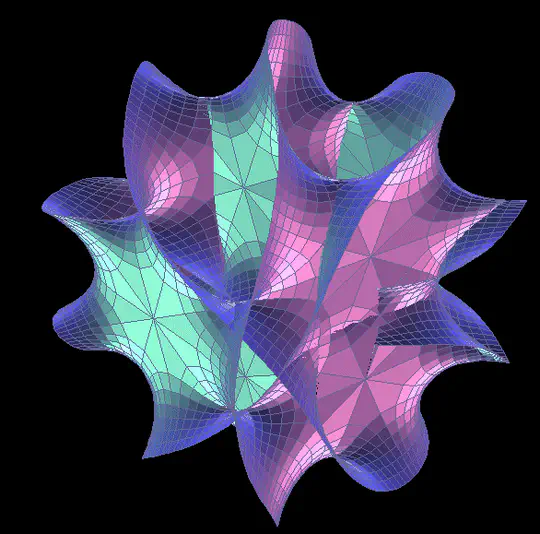
Bachelor’s Thesis. Investigated the existence of de Sitter vacua in string theory and their role in modeling our universe. Analyzed quantum effects on compactified spaces to bypass theoretical constraints and enhance understanding of quantum gravity.

Supervisor: Prof. Keshav Dasgupta
de Sitter Cosmology in Quantum Gravity
Cosmic String Signal Extraction

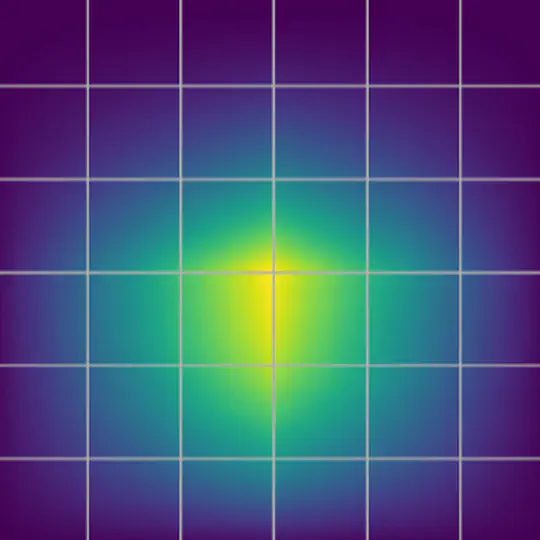
Modeled cosmic string signals amidst non-linear noise from early-universe phase transitions. Utilized match-filtering techniques to identify signals and study their formation and evolution using quantum field theory.

Supervisor: Prof. Robert Brandenberger
Cosmic String Signal Extraction
Photon Recycling Effects in Light Propulsion

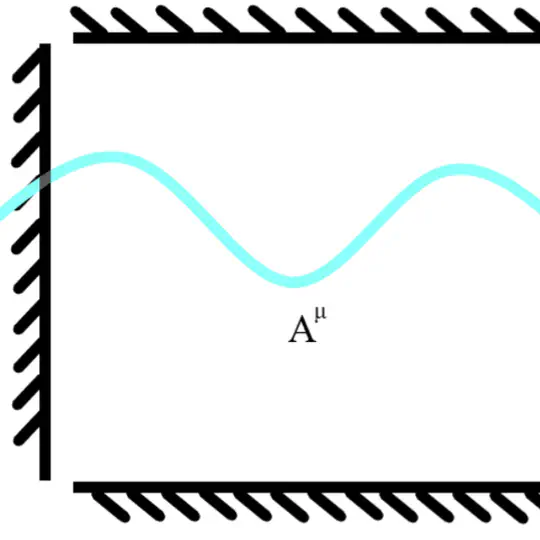
Studied photon-recycling propulsion systems, focusing on quantum effects and efficient momentum transfer. Analyzed light interactions and radiation pressure to optimize energy transfer for quantum and aerospace technologies.

Supervisor: Prof. Andrew Higgins
Photon Recycling Effects in Light Propulsion
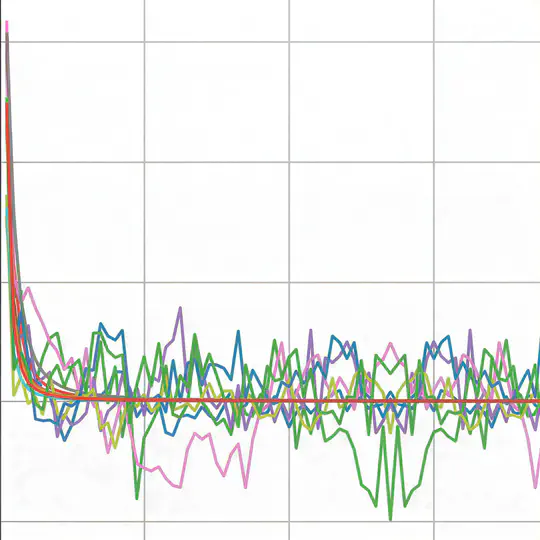
Fast Radio Burst Repeater Correlations

Analyzed fast radio bursts signals to explore black-white hole tunneling connections. Processed CHIME data to correct for noise and characterize scintillation patterns, improving astrophysical signal interpretation.

Supervisor: Prof. Victoria Kaspi
Fast Radio Burst Repeater Correlations
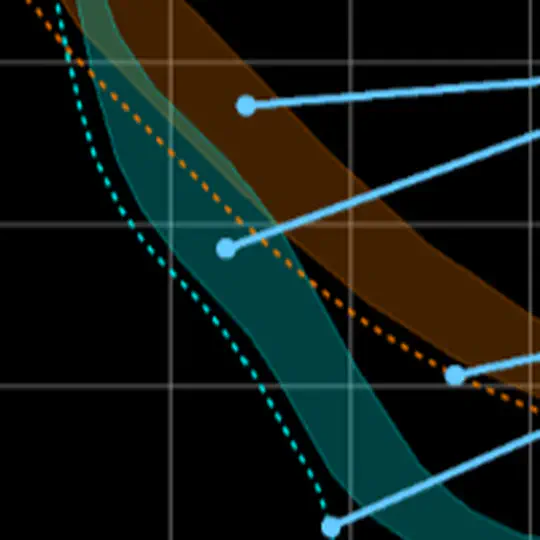
Tensor Networks for Cancer Radiation Doses

Developed neural network models to optimize radiation therapies for tumors. Simulated helical trajectories to reduce damage to healthy tissues while enhancing targeting precision.

Supervisor: Prof. Marija Popovic
Tensor Networks for Cancer Radiation Doses
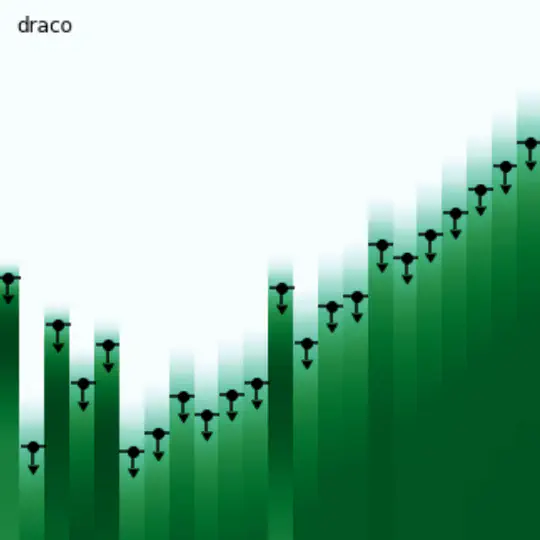
Gamma Ray Bursts in Tidal Disruption Events

Studied γ-rays in supernovae and tidal disruption events using Fermi-LAT data. Cleaned background noise and performed statistical analyses to identify and characterize high-energy sources.

Supervisor: Prof. Kenneth Ragan
Gamma Ray Bursts in Tidal Disruption Events
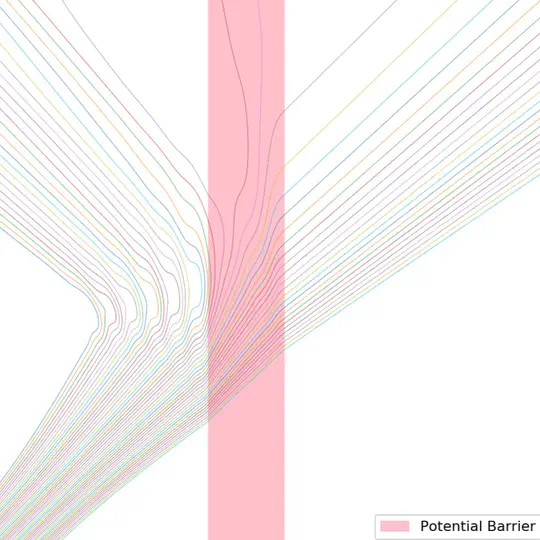
Quantum Trajectory Neural Networks

Solved quantum trajectories in pilot-wave theory using neural networks and the Crank-Nicolson method. Developed scripts to efficiently compute trajectories for diverse potentials in quantum systems.

Supervisor: Prof. Ivan Ivanov
Quantum Trajectory Neural Networks
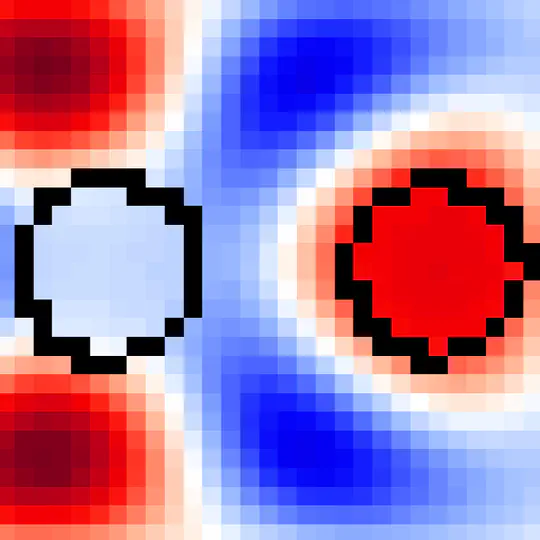
Topological Confinement of Light in Circuits

Investigated topological confinement in nanobeam microcavities to optimize photonic circuits. Simulated resonant modes to control frequency, intensity, and phase for quantum and optical applications.

Supervisor: Prof. Pablo Bianucci
Topological Confinement of Light in Circuits

Personal

You feel it before you see it. A flicker at the edge of the viewport. It knows you scrolled this far. It has been waiting.
Bloc Fantôme
An isometric 2.5D creative sandbox inspired by Minecraft. Features 100+ block types, real-time liquid dynamics, multi-dimension exploration (Overworld, Nether, End), dynamic lighting, weather systems, and 3D positional audio. Built entirely in Python with Pygame.
Bloc Fantôme
Water & Fluid Simulations
Physics-based fluid dynamics simulations implementing Navier-Stokes equations, smoothed particle hydrodynamics (SPH), and real-time water rendering. Features wave propagation, viscosity modeling, and interactive fluid behavior visualizations.
Water & Fluid Simulations
Terraria Procedural Generation Algorithms
Deep dive into Terraria’s world generation mechanics. Analyzes biome placement algorithms, cave system generation, ore distribution patterns, structure spawning logic, and the mathematical foundations behind procedural 2D sandbox worlds.
Terraria Procedural Generation Algorithms
Minecraft Procedural Generation Algorithms
Mathematical exploration of Minecraft’s world generation algorithms. Implements LCG random number generation, multi-octave Perlin noise terrain, structure placement theory, Ender Dragon pathfinding AI, and stronghold ring distribution analysis with publication-quality visualizations.
Minecraft Procedural Generation Algorithms
Background artwork by Ionomycin, Dominik Mayer, Montague Dawson, moninlj, Y_Y, and mintaii!